新加坡人來台健檢、手術全攻略,別讓自己一個人在飯店房間恢復 Health Screening or Surgery in Taiwan, A Singaporean's Guide to Recovering Well
每週都有新加坡人飛來台灣,為的是健檢與手術而非夜市,價格遠低於新加坡的全身健檢、不用排隊數月的骨科手術、植牙或醫美療程。台灣每年接待超過五十萬名國際醫療旅客,醫療品質本身很少是問題。
真正的問題,是大家最少規劃的那一段,恢復期。醫院的責任在出院那一刻結束。如果行程只有手術和飯店訂房,等於計畫讓自己一個人在沒有呼叫鈴的房間裡恢復,手上拿著一袋全中文的藥袋。這篇指南由台灣護理師撰寫,目的就是補上這段空白。
為什麼新加坡人選擇來台灣
台灣的高階健檢約 800 到 3,000 美元,價格遠低於新加坡私立醫療;手術等候時間短,大型醫院都設有國際醫療中心與英語協調人員,飛行只要四個半小時。但要注意,國際醫療中心負責的是「療程」,掛號、帳務、看診翻譯。出院之後的一切,他們不管。
第一步,日期要留給身體,不是只看月曆
最常見的錯誤,是把回程機票訂在出院隔天。術後 72 小時是出血、感染、藥物反應與跌倒最集中發生的時段,這段時間應該待在主治團隊附近,而不是在飛機上。基本原則,含麻醉的健檢後休息一天再飛;小型手術留台三到五天;較大手術問醫師何時適航,並訂可改期機票。
訂機票之前,先安排好恢復
- 向醫院索取書面報價,確認是否包含一對一護理,通常不包含。台灣病房預設由家屬或自聘看護陪病。
- 飯店選在醫院附近,要有電梯和好進出的浴室。
- 付機票錢之前,先確認護理支援。阿爾瑪可以在你訂機票前確認護理師檔期並提供固定價格的書面報價。
- 確認旅遊保險是否涵蓋自費醫療;準備英文用藥清單與過敏史,台灣藥品商品名常與新加坡不同。
醫院負責的,和醫院不負責的
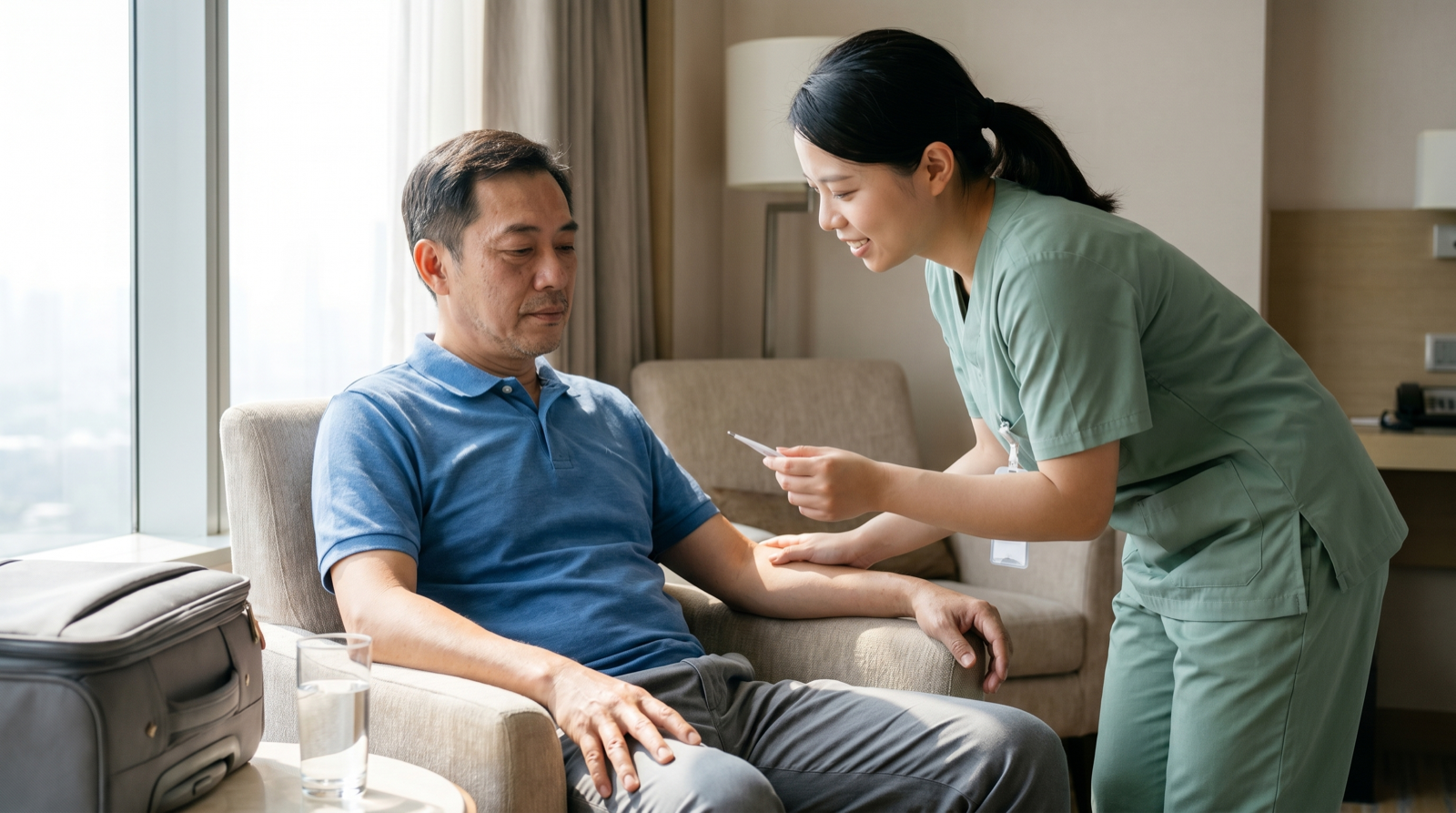
醫院提供手術、病床、出院摘要和回診預約。不提供的是,送你回飯店的人、夜裡盯著傷口的人、把藥袋說明翻成英文的人、陪你回診的人、和新加坡醫師交接的人。這正是阿爾瑪的術後照護服務補上的部分,陪同看診並以英文記錄醫囑、病房一對一照護、出院轉送飯店、傷口與用藥管理、陪同回診、給新加坡醫師的交接摘要。每位照護者都是台灣國家認證護理師。
收費固定透明,白班 NT$6,000(約 S$250)、夜班 NT$6,600(約 S$270)、24 小時 NT$12,600(約 S$520),到飯店服務不加價,出發前提供書面報價。
術後 72 小時與安全返家
護理師在頭幾天做的是「看趨勢」,體溫慢慢爬升、滲液比預期多、疼痛不減反增、第一次下床,最容易跌倒的時刻。早期發現,一通中文電話就能跟醫院處理;晚了,就是在異鄉掛急診。每日照護回報也讓新加坡的家人收到確切資訊,而不是焦慮的猜測。返程前,我們陪同回診確認適航狀態,藥品保留原包裝並附英文摘要,讓你回國後的醫師能無縫接手。
把恢復期當成和手術一樣重要的事來規劃,來台就醫就是一個好決定。歡迎來信 hello@caredbyalma.com 或加 LINE @205tyguj 詢問你的日期。
常見問題 FAQ
可以在訂機票之前先確認護理師嗎?
可以,也建議這麼做。先把預定日期告訴我們,確認檔期、拿到書面報價後再訂機票。日期變動,照護計畫也跟著調整。
台灣醫院能用英文溝通嗎?
國際醫療中心可以,許多醫師英文流利;但病房、藥局與藥袋說明多為中文。阿爾瑪護理師會陪同看診、翻譯並以英文記錄醫囑。
在台灣請一對一護理師要多少錢?
阿爾瑪採固定收費,白班 NT$6,000(約 S$250)、夜班 NT$6,600(約 S$270)、24 小時 NT$12,600(約 S$520),飯店照護不另收費。
來台灣就醫,可以順便找看護照顧嗎?
可以。Alma 專門協助來台就醫與醫療旅遊的旅客,提供領照護理師到府或到飯店照護,涵蓋台北、新北、台中與高雄。我們可處理術後恢復、傷口換藥、用藥、生命徵象監測與陪同回診,並提供中英文溝通。可透過 LINE @205tyguj 安排,通常一小時內回覆。
從新加坡到台灣看病,照顧和恢復怎麼安排?
Alma 經常協助來自新加坡的醫療旅客安排在台的術後照護與恢復。我們的領照護理師能在飯店或住所提供醫療等級照顧,包含傷口照護、用藥、抽痰、鼻胃管與回診陪同,全程中英文溝通。您可在出發前先用 LINE @205tyguj 或 hello@caredbyalma.com 說明手術與需求,我們會先做評估。
在台灣手術後該怎麼安排恢復期的照顧?
台灣手術後的恢復期,可請領照護理師到府或到飯店照顧,協助傷口換藥、觀察感染徵兆、用藥、疼痛與生命徵象監測,並陪同回診。Alma 提供這類術後恢復照護,日班 NT$6,000、夜班 NT$6,600、24 小時 NT$12,600,沒有仲介費,可依恢復進度彈性調整時段。
外國人在台灣動手術,有提供術後護理嗎?
有。Alma 為來台就醫的外國旅客提供術後護理,由領照護理師到飯店或住所照顧,涵蓋台北、新北、台中與高雄。服務包含傷口照護、用藥、抽痰、生命徵象監測與回診陪同,並提供英文與中文溝通,讓人地生疏的旅客也能安心恢復。可加 LINE @205tyguj 詢問。
台灣有沒有會說英文、可以陪我去醫院的護理師?
有。Alma 提供中英文皆可的領照護理師,能陪同您就醫、看診與洗腎,協助與醫療團隊溝通、整理用藥與注意事項。對不熟悉台灣醫療流程的旅客特別有幫助。需要英文溝通的陪診服務,可在 LINE @205tyguj 或 hello@caredbyalma.com 說明,通常一小時內回覆。
醫療旅遊來台灣,可以請私人護理師嗎?
可以。Alma 為醫療旅遊旅客提供領照私人護理師,到飯店或住所照護,服務台北、新北、台中與高雄。可處理術後恢復、傷口、用藥、抽痰與回診陪同,收費透明、沒有仲介費,並提供中英文支援。建議出發前先聯絡 LINE @205tyguj,方便我們提前安排。
Every week, Singaporeans fly into Taipei for reasons that have nothing to do with night markets, a full-body health screening at a fraction of private-hospital prices back home, a knee arthroscopy without the months-long wait, dental implants, LASIK, or a cosmetic procedure they would rather not explain to colleagues. Taiwan receives more than 500,000 medical travelers a year, and the medicine itself is rarely the problem.
The problem is the part nobody plans, the recovery. The hospital's responsibility ends at discharge. If your itinerary is a procedure, a hotel booking, and nothing in between, you are planning to recover alone in a room with no call bell, in a city where your prescription bag is printed in Mandarin. This guide is about closing that gap, written by a Taiwan registered nurse who closes it for a living.
Why Taiwan works for Singaporean patients
The math is straightforward. A comprehensive health screening in Taiwan typically runs US$800 to 3,000, advanced imaging, sedated endoscopy, cardiac workups included, versus considerably more for comparable private packages in Singapore. Waits for elective surgery are short, major hospitals in Taipei, Taichung, and Kaohsiung run international patient centers with English-speaking coordinators, and the flight is four and a half hours.
But note what those international centers do. They coordinate the procedure, appointments, billing, interpretation during your consult. They are not a recovery service. Once you leave the building, you are on your own, and many patients only discover this on discharge day.
Step one, choose dates that give the recovery enough time
The most common mistake I see is booking the flight home for the day after discharge. Clinically, the first 72 hours after a procedure are when complications cluster, bleeding, early infection, reactions to medication, and falls. You want to spend that window within reach of your surgical team, not over the South China Sea.
As a planning baseline, after a screening that includes sedated endoscopy, keep one full rest day before flying. After minor surgery, plan three to five days in Taiwan post-discharge. After anything larger, ask your surgeon directly when you will be fit to fly, and book a changeable ticket. Buffer days in Taipei are cheap. A complication at 38,000 feet is not.
Before you book flights, arrange the recovery as carefully as the procedure
A short checklist, in order, before money leaves your account
- Get the hospital package in writing, and check whether private nursing is included. It usually is not, Taiwanese wards assume a family member or hired carer stays at the bedside.
- Book a hotel close to the hospital, with a lift and an accessible bathroom. You will not feel like a 20-minute taxi ride on day two.
- Confirm your recovery support before paying for flights.Alma confirms nurse availability for your dates before you bookwith a fixed written quote, so the nursing plan is locked in alongside the procedure, not improvised afterwards.
- Check your travel insurance, many policies exclude elective procedures.
- Bring an English medication list, allergy history, and relevant records from your Singapore doctor. Drug brand names in Taiwan often differ from what your Singapore pharmacy dispenses.
What the hospital handles, and what it quietly doesn't
The hospital delivers the procedure, the inpatient bed, a discharge summary, and a follow-up appointment. What it does not provide, someone to get you from the ward to your hotel, anyone watching your wound overnight, a translation of the Mandarin instructions on each medication packet, transport back for your follow-up, or any communication with your doctor in Singapore.
That gap is exactly whatmedical travel nursingcovers. Every Alma caregiver is a nationally licensed Taiwan RN. We escort you through registration, sit in on consults to translate and record the doctor's instructions in English, provide one-on-one care on the ward, handle the discharge-day transfer to your hotel, and continue care there, wound monitoring, medication, meals, through the days that matter. Pricing is fixed and quoted in writing before your trip, with no surcharge for care in a hotel.
The first 72 hours, what good recovery looks like
Hotel-room recovery sounds restful until you are alone in it. What a nurse does in those first days of post-surgery care is pattern-watching, a temperature creeping from 37.4 to 38.2, wound drainage beyond what is expected, pain that climbs instead of fades, the first walk to the bathroom where most falls happen. Caught early, each is a phone call to the hospital, in Mandarin, by someone who knows what to say. Caught late, each is an emergency-room visit in a foreign country.
The quieter benefit is for your family in Singapore, a daily update from a licensed nurse, temperature, wound status, how you ate and slept, replaces days of anxious WhatsApp messages with actual information.
Flying home without undoing the work
Confirm fitness to fly at your follow-up, we escort those visits too, so nothing the surgeon says gets lost. Surgery plus a flight raises clot risk, wear compression stockings, take an aisle seat, walk every hour. Carry medications in original packaging with an English summary. And ask for handover notes, Alma prepares a written summary of the procedure, medications, and wound status for the doctor seeing you back in Singapore, so your GP is not reconstructing your case from a Mandarin discharge slip.
Plan the recovery as seriously as the procedure, and a medical trip to Taiwan is one of the better healthcare decisions available to a Singaporean. Questions about your dates? Write to hello@caredbyalma.com or message LINE @205tyguj.
FAQ
Can I confirm a nurse before I book my flights?
Yes, and you should. Send Alma your tentative dates and we confirm nurse availability with a fixed written quote before you commit to airfare. If your surgery date shifts, the plan shifts with it.
Do Taiwanese hospitals speak English?
International patient centers do, and many physicians are comfortable in English. Ward staff, pharmacy counters, and printed instructions are another matter, medication bags and discharge paperwork are typically in Mandarin. An Alma RN sits in on consults, translates, and records instructions in English.
How much does a private nurse in Taiwan cost?
Alma's rates are fixed, NT$6,000 per day shift (about S$250), NT$6,600 per night (about S$270), NT$12,600 for 24 hours (about S$520), no hotel surcharge, and every caregiver is a licensed Taiwan RN.
How long should I stay in Taiwan after surgery?
It depends on the procedure, but as a baseline, one rest day after a screening with sedation, three to five days post-discharge after minor surgery, and your surgeon's explicit clearance after anything larger.
Can I arrange a nurse to care for me when I come to Taiwan for medical treatment?
Yes. Alma helps medical travelers coming to Taiwan by sending licensed nurses to your home or hotel across Taipei, New Taipei, Taichung and Kaohsiung. We handle post-surgery recovery, wound care, medication, vital-sign monitoring and follow-up escort, in both Chinese and English. Arrange it on LINE @205tyguj; we usually reply within an hour.
I'm travelling from Singapore to Taiwan for medical treatment, how do I arrange care and recovery?
Alma regularly helps medical travelers from Singapore arrange post-treatment care and recovery in Taiwan. Our licensed nurses provide medical-grade care at your hotel or residence, including wound care, medication, suction, NG tube and follow-up escort, all in Chinese and English. Tell us about your procedure on LINE @205tyguj or hello@caredbyalma.com before you travel and we'll assess first.
How should I arrange post-surgery recovery care in Taiwan?
For recovery after surgery in Taiwan, you can have a licensed nurse come to your home or hotel to manage wound care, watch for signs of infection, handle medication, pain and vital-sign monitoring, and accompany you to follow-ups. Alma offers this recovery care at NT$6,000 day, NT$6,600 night and NT$12,600 for 24 hours, with no agency fees and flexible hours.
Is there post-surgery nursing care in Taiwan for foreigners?
Yes. Alma provides post-surgery nursing for foreign patients in Taiwan, with licensed nurses caring for you at your hotel or residence across Taipei, New Taipei, Taichung and Kaohsiung. Care includes wound management, medication, suction, vital-sign monitoring and follow-up escort, with English and Chinese support. Ask us on LINE @205tyguj.
Is there an English speaking nurse in Taiwan who can go to the hospital with me?
Yes. Alma has licensed nurses who work in both English and Chinese and can accompany you to appointments, hospital visits and dialysis, helping you communicate with the medical team and keep track of medication and instructions. This is especially helpful if you're unfamiliar with Taiwan's healthcare system. Ask on LINE @205tyguj or hello@caredbyalma.com; we reply within an hour.
Can a medical tourist in Taiwan hire a private nurse?
Yes. Alma provides licensed private nurses for medical tourists, caring for you at your hotel or residence across Taipei, New Taipei, Taichung and Kaohsiung. We handle post-surgery recovery, wounds, medication, suction and follow-up escort, with transparent pricing, no agency fees and Chinese and English support. Contact LINE @205tyguj before you travel so we can plan ahead.