
中風出院後的居家照護指南,黃金恢復期、居家安全與家屬最常犯的錯 Stroke Home Care in Taiwan, The Golden Recovery Window, Home Safety, and the Mistakes Families Make Most
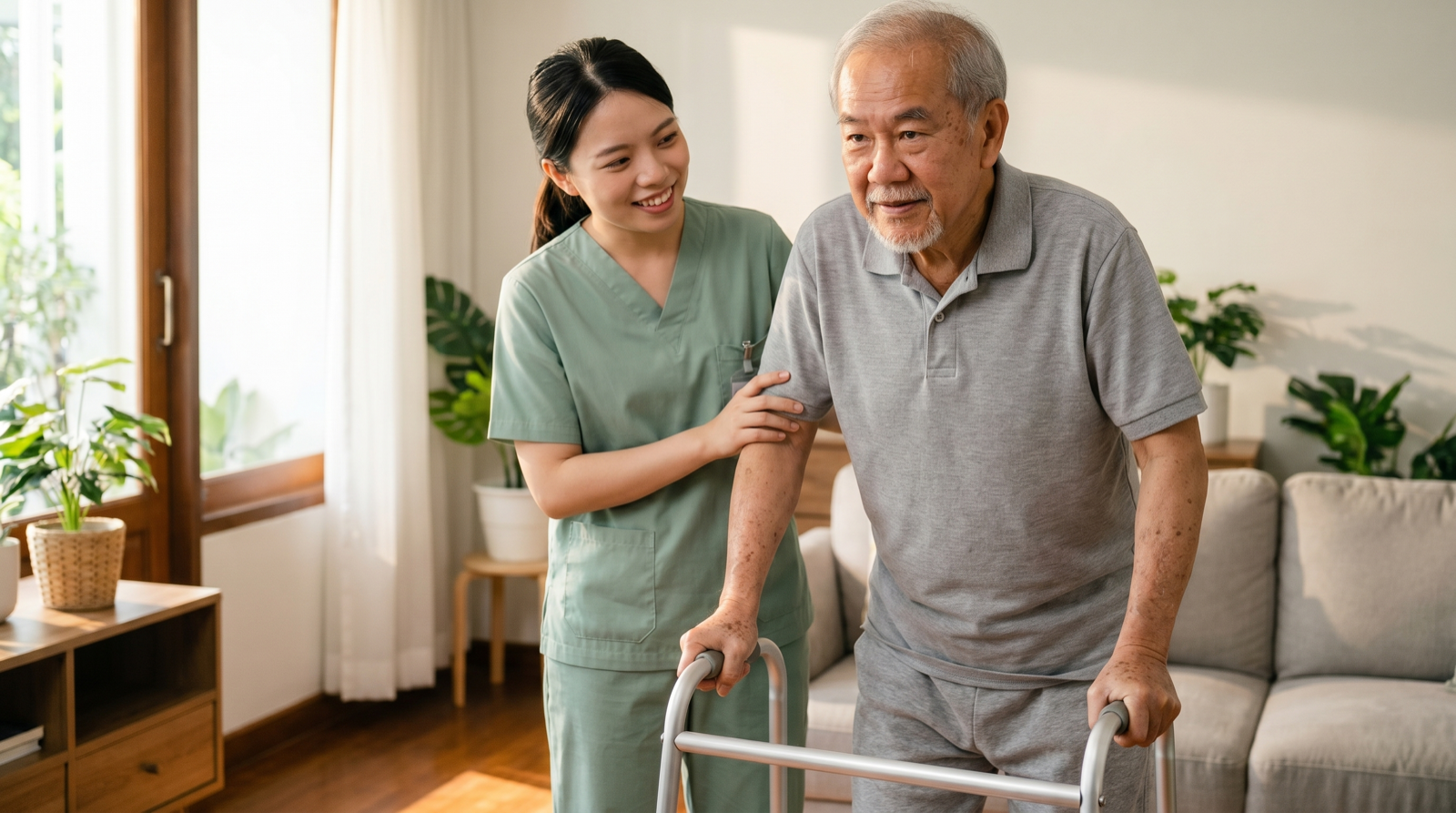
中風病人出院那一天,家屬最常問我們的一句話是,「接下來呢?」醫院把急性期穩住了,但真正漫長的恢復,是從回家開始。這篇文章整理出院後最重要的幾件事,什麼時候復健效果最好、在家怎麼照顧、哪些錯誤會不知不覺拖慢恢復。所有照護細節,請依主治醫師與復健團隊的指示為準,本文是一般性的衛教整理。
黃金恢復期,前三到六個月最關鍵
中風後的前三到六個月,大腦的神經可塑性最高,是功能恢復最快的階段,臨床上常稱為「黃金恢復期」。這段時間復健科醫師與治療師安排的訓練,做得越確實,能拿回來的功能通常越多。居家照護的角色是支持復健計畫,而不是取代它協助病人完成治療師交代的居家運動、按時回診、維持體力與營養,讓每一次正式復健都能在最好的狀態下進行。
也要先說一句實話,過了六個月不代表沒希望。恢復會變慢,但不會歸零。許多病人在第一年、甚至更久之後仍持續進步,前提是復健沒有停。
半側偏癱的日常照護,擺位與翻身
偏癱病人的患側沒有正常的肌肉張力保護,照顧時有幾個基本原則
- 每兩小時翻身一次預防壓瘡。尾椎、腳跟、肩胛這些骨突處要特別檢查皮膚有沒有發紅不退。
- 患側手臂要有支撐。偏癱的肩膀容易出現肩關節半脫位,坐著時用枕頭或桌面托住患側手臂,移位時絕對不要拉患側的手。
- 擺位時注意患側。側躺、平躺的正確姿勢,出院前請治療師示範一次,家屬實際做給他看,確認動作正確再回家。
吞嚥與飲食,最容易被低估的風險
中風後吞嚥困難很常見,最大的危險是嗆入造成吸入性肺炎,而且不一定會咳給你看,有些病人是「無聲嗆入」,東西進了氣管卻沒有明顯咳嗽。進食的基本安全原則,用餐時坐正、不要躺著餵;依語言治療師的評估調整食物質地,必要時將液體增稠;吃完後維持坐姿至少三十分鐘。如果發現吃東西常清喉嚨、聲音變濕變啞、反覆低燒或不明原因肺炎,要回診告訴醫療團隊,這些都是吞嚥出問題的警訊。
預防第二次中風,藥不能自己停
中風過一次的人,再中風的風險比一般人高得多。抗凝血劑、降血壓藥這些藥物就是為了壓低這個風險而開的覺得「狀況穩定了」就自行停藥或減藥,是二次中風最常見的原因之一。任何藥物調整都必須經過主治醫師。在家養成固定量血壓的習慣,把數字記下來,回診時帶給醫師看,比口頭描述「最近好像比較高」有用得多。
同時,全家都要會辨認二次中風的警訊。記住「臨微不亂」,請病人微笑(臉歪嘴斜)、舉手(單側無力下垂)、說句話(口齒不清)只要出現任何一項,搶時間、立刻打 119。不要等等看、不要先睡一覺,每一分鐘都是腦細胞。
居家安全與心理支持
回家前先把環境整理好,浴室與走道加裝扶手、收掉地毯與電線等絆倒物、夜間留小夜燈、常用物品放在健側伸手可及的地方。另外要有心理準備,中風後的挫折感與憂鬱非常普遍。病人講話變慢、找不到詞,請給他時間,不要急著替他說完;多肯定做得到的事,而不是一直提醒做不到的。情緒低落持續超過兩週、影響進食與復健意願時,回診時務必告訴醫師。
家屬最常犯的四個錯
- 什麼都幫他做。出於心疼,餵飯、穿衣、移位全部代勞,但病人不練,功能就不會回來。原則是「協助,不是取代」,他能做八成,你只補那兩成。
- 進步變慢就停掉復健。恢復本來就不是直線,平原期之後常常還有進展。要不要調整復健計畫,由復健科醫師決定,不是由疲倦的家屬決定。
- 把嗆咳當小事。「他吃東西會咳一下,老人都這樣啦」,這句話我們聽過太多次,後面接的常常是一場吸入性肺炎住院。
- 照顧者把自己燒乾。中風照護是以月、以年計的長跑。沒有輪替、沒有喘息的照顧者,自己倒下的速度往往比想像中快。
如果家裡人手不夠,這正是 Alma 能補位的地方。我們的照護者都是有醫院臨床經驗的全國合格護理師(特別護士),可以在出院當天到病房交接,回家後協助翻身擺位、鼻胃管與用藥管理、陪同回診,並協助病人完成復健團隊交代的居家運動(協助執行,不是物理治療本身)。可以參考我們的術後與出院照護服務;夜間翻身與抽痰負擔重的家庭,也有24 小時照護由兩位護理師輪班。日班(早上 8 點到晚上 8 點)每日 NT$6,000、夜班 NT$6,600、24 小時 NT$12,600,固定價格。LINE @205tyguj 一小時內回覆。
常見問題 FAQ
中風復健的黃金期是多久?錯過就沒救了嗎?
一般指中風後的前三到六個月,這段期間神經可塑性最高、恢復最快。但超過六個月仍可能持續進步,重點是依復健科的計畫持續訓練,不要因為進步變慢就放棄。
中風病人多久要翻身一次?
無法自行翻身的病人,原則上每兩小時翻身一次以預防壓瘡,並每天檢查尾椎、腳跟等骨突處皮膚。實際頻率與擺位方式,請依醫療團隊針對個案的指示調整。
中風後吃東西會嗆到,該注意什麼?
進食時坐正、小口慢吃、依語言治療師評估調整食物質地(必要時增稠液體),餐後維持坐姿三十分鐘。若出現聲音變濕、反覆發燒或肺炎,可能是無聲嗆入,務必回診評估吞嚥功能。
Alma 的護理師可以幫中風病人做復健嗎?
我們提供的是復健運動的「協助執行」,陪伴並協助病人完成復健科與治療師開立的居家運動,不是物理治療本身。Alma 的特別護士皆為具醫院臨床經驗的合格護理師,服務範圍涵蓋台北、新北、台中、高雄。
爸爸中風出院後,在家裡該怎麼照顧?
中風長輩出院後的居家照顧,重點在定時翻身防褥瘡、安全餵食或鼻胃管灌食、按時服藥、觀察吞嚥與再中風徵兆,並配合復健。若家人沒把握,可請領照護理師到府指導與執行。Alma 服務台北、新北、台中與高雄,可協助這些醫療照護,需要可加 LINE @205tyguj。
爸爸中風了,我完全不會照顧怎麼辦?
先別自責,中風照護本來就需要專業協助。您可以請領照護理師到府,他們會處理餵食、翻身、用藥、傷口與管路,並教您日常照顧的技巧,讓您慢慢上手。Alma 的護理師能陪您一起照顧,減輕壓力。想討論長輩狀況可加 LINE @205tyguj,通常一小時內回覆。
中風臥床的長輩,居家照顧要注意什麼?
照顧中風臥床長輩,要特別注意每兩小時翻身防壓瘡、保持皮膚乾爽、預防嗆咳與吸入性肺炎、注意管路清潔,以及觀察發燒、意識改變等再中風或感染徵兆。這些若處理不當風險很高,Alma 的領照護理師可到府執行抽痰、鼻胃管與傷口照護並判斷病況變化。
中風之後的居家復健可以在家做嗎?
中風後的部分復健確實可以在家進行,配合醫師與治療師指示,做關節活動、擺位與日常生活訓練,並避免長期臥床導致的併發症。Alma 的領照護理師可在照護期間協助安全擺位、預防壓瘡、用藥與生命徵象監測,並陪同回診復健。需要安排可加 LINE @205tyguj。
台灣有沒有專門照顧中風病人的居家護理師?
有。Alma 提供領照護理師到府照顧中風長輩,服務台北、新北、台中與高雄。可處理鼻胃管灌食、抽痰、傷口換藥、用藥、生命徵象監測與回診陪同,並協助安全翻身擺位。收費日班 NT$6,000、夜班 NT$6,600、24 小時 NT$12,600,沒有仲介費。可加 LINE @205tyguj 詢問。
中風的家人需要請看護還是護理師?
如果長輩有鼻胃管、需要抽痰、傷口照護或病況不穩,通常需要的是領照護理師而非一般看護,因為看護不能執行醫療處置。若只需日常陪伴與生活照顧,看護即可。Alma 的特別護理師能合法處理這些醫療照護,可先在 LINE @205tyguj 說明狀況,由我們評估建議。
If your mother or father has had a stroke in Taiwan and you are reading this from another country, the discharge day is usually when the anxiety peaks. The hospital has handled the acute phase; now the long work of recovery moves home, and you are managing it through video calls and a family group chat. 這份指南告訴你接下來幾個月真正要顧的重點,還有那些會悄悄拖慢復原的常見錯誤。 As always, the treating physician and rehabilitation team's instructions take priority over anything written here.
The golden window, the first three to six months
The brain's capacity to rewire itself, neuroplasticity, is at its highest in the first three to six months after a stroke. This is when rehabilitation produces the biggest gains, which is why Taiwanese rehab physicians push patients to start early and train consistently. 居家照護是用來支持這套計畫,不是取代它,確保醫師交代的居家運動有確實做到、回診不漏掉,讓病人吃得夠、休息夠,才有力氣在復健時下功夫。
One honest caveat, six months is not a cliff. Progress slows after the window, but it does not stop. Many patients keep improving well into the first year and beyond, as long as the rehabilitation continues.
Daily care for hemiplegia, positioning and turning
A few non-negotiables for a patient with one-sided weakness. Repositioning every two hours prevents pressure ulcers; the tailbone, heels, and shoulder blades need daily skin checks. The affected arm must always be supported, the paralyzed shoulder is prone to subluxation (partial dislocation), so it should rest on a pillow or table when sitting, and no one should ever pull on that arm during transfers. Before discharge, ask the therapist to demonstrate correct lying and side-lying positions, and have whoever will do the daily care practice in front of them.
Swallowing, the most underestimated risk
Difficulty swallowing (dysphagia) is common after stroke, and its real danger is aspiration pneumonia, food or liquid entering the airway. Some aspiration is silent, no dramatic coughing, just a wet-sounding voice, frequent throat clearing, or recurring low-grade fevers. The basics, the patient eats sitting fully upright, never reclined; food texture follows the speech therapist's assessment, with liquids thickened if prescribed; and the patient stays upright for at least thirty minutes after meals. If anyone in the family says "he just coughs a little when he eats, it's normal at his age, " treat that as a red flag, not reassurance.
Preventing a second stroke
Someone who has had one stroke is at significantly elevated risk of another. The anticoagulants and blood pressure medications prescribed at discharge are what hold that risk down, and stopping them because the patient "feels stable" is one of the most common causes of a second stroke. No medication changes without the doctor. Daily home blood pressure readings, written down and brought to follow-up visits, give the physician far better information than "it seemed a bit high lately."
Everyone in the household, including the foreign domestic helper, if there is one, should know the FAST signs, face drooping on one side, one arm drifting or weak, slurred or strange speech. Any one of these means calling 119 immediately. Not waiting to see, not sleeping it off. In stroke, minutes are brain.
Home safety and the emotional side
Before the patient comes home, grab bars in the bathroom and along walkways, rugs and loose cables removed, a night light on the route to the toilet, and everyday items placed within reach of the stronger side. Emotionally, expect frustration and very possibly depression, both are common after stroke. When speech is slow, give time instead of finishing sentences; praise what the patient can do rather than cataloguing what they cannot. Low mood lasting more than two weeks, or refusal to eat or attend rehab, belongs in the conversation at the next doctor's visit.
The four mistakes families make most
- Doing everything for the patient.It comes from love, but feeding, dressing, and moving someone who could partly do it themselves trains helplessness. Assist, don't replace, if they can do eighty percent, supply only the missing twenty.
- Quitting rehab when progress plateaus.Recovery is not linear; gains often resume after a flat stretch. Whether to adjust the program is the rehab physician's call.
- Dismissing swallowing problems.The cough at dinner that everyone ignores is frequently the prologue to an aspiration pneumonia admission.
- Letting one caregiver burn out.Stroke care is measured in months and years. A single relative covering nights and days without relief will break down faster than anyone expects, and from abroad, you may not see it coming.
This is where Alma fits for many overseas families. Every Alma caregiver is a nationally licensed registered nurse with hospital clinical experience. We take handover at the ward on discharge day, and at home we manage the clinical layer, NG tube care, suctioning, medication management, two-hourly repositioning, escorting the patient to follow-ups, and assist with the rehab team's prescribed home exercises (supporting the program, not providing physical therapy itself). See ourpost-discharge care serviceor24-hour carewith two nurses in shifts for families where nights are the hardest part. Pricing is fixed, NT$6,000 per day shift (8am to 8pm), NT$6,600 per night, NT$12,600 for 24 hours. We send updates to family abroad in English or Chinese, LINE @205tyguj (replies within an hour) or hello@caredbyalma.com. We serve Taipei, New Taipei, Taichung, and Kaohsiung.
FAQ
How long is the golden recovery window after a stroke?
Generally the first three to six months, when neuroplasticity is highest and rehabilitation gains come fastest. Improvement can continue well beyond that, so the rehab program should not stop just because progress slows.
Can I follow my parent's recovery from overseas?
Yes. Alma nurses send regular updates in English or Chinese, blood pressure logs, feeding and repositioning notes, how rehab exercises went, so family abroad can see the actual picture rather than relying on a relative's brief summary.
Does Alma provide physical therapy for stroke patients?
No, physical therapy stays with the hospital's rehabilitation team. Ourprivate nursesassist the patient in completing the exercises that team prescribes, and handle the nursing care around it, positioning, tube care, medication, and swallowing-safe feeding.
What are the warning signs of a second stroke?
Use FAST, face drooping, arm weakness on one side, slurred speech, any one of these means call 119 in Taiwan immediately. Make sure everyone in the household, including any domestic helper, knows these signs.
How do I care for my father at home after he's discharged following a stroke?
After a stroke patient is discharged, home care centers on regular repositioning to prevent bedsores, safe feeding or NG-tube feeding, giving medication on time, watching swallowing and signs of another stroke, and supporting rehab. If you're unsure, a licensed nurse can guide and carry out this care. Alma serves Taipei, New Taipei, Taichung and Kaohsiung; reach us on LINE @205tyguj.
My dad had a stroke and I have no idea how to care for him, what should I do?
Don't blame yourself; stroke care genuinely needs professional help. You can have a licensed nurse come to the home to manage feeding, repositioning, medication, wounds and tubes, and teach you everyday care skills so you gradually gain confidence. Alma's nurses care alongside you to ease the pressure. Message LINE @205tyguj to talk it through; we reply within an hour.
What do I need to watch for when caring for a bedridden stroke patient at home?
For a bedridden stroke patient, watch carefully for these, reposition every two hours to prevent pressure sores, keep skin dry, prevent choking and aspiration pneumonia, keep tubes clean, and watch for fever or changes in consciousness that may signal another stroke or infection. These carry real risk if mishandled; Alma's licensed nurses can do suction, NG-tube and wound care at home and assess changes.
Can stroke rehabilitation be done at home?
Some stroke rehabilitation can be done at home, following your doctor and therapist's instructions for joint movement, positioning and daily-living training, while avoiding the complications of prolonged bed rest. Alma's licensed nurses can help with safe positioning, pressure-sore prevention, medication and vital-sign monitoring during care, and accompany rehab follow-ups. Arrange it on LINE @205tyguj.
Is there a nurse for stroke patients in Taiwan who can come to the home?
Yes. Alma sends licensed nurses to care for stroke patients at home across Taipei, New Taipei, Taichung and Kaohsiung. They handle NG-tube feeding, suction, wound care, medication, vital-sign monitoring and follow-up escort, and help with safe repositioning. Pricing is NT$6,000 day, NT$6,600 night and NT$12,600 for 24 hours, with no agency fees. Ask on LINE @205tyguj.
Does a stroke patient need a caregiver or a nurse?
If your relative has an NG tube, needs suction or wound care, or is medically unstable, they usually need a licensed nurse rather than a general caregiver, since caregivers can't perform medical procedures. For everyday companionship and daily-living help, a caregiver is fine. Alma's special nurses can legally handle this medical care; tell us the situation on LINE @205tyguj for an assessment.