
到府護理師第一次到家做什麼,居家護理評估的四個部分 What Happens on the First Home Nursing Visit in Taiwan
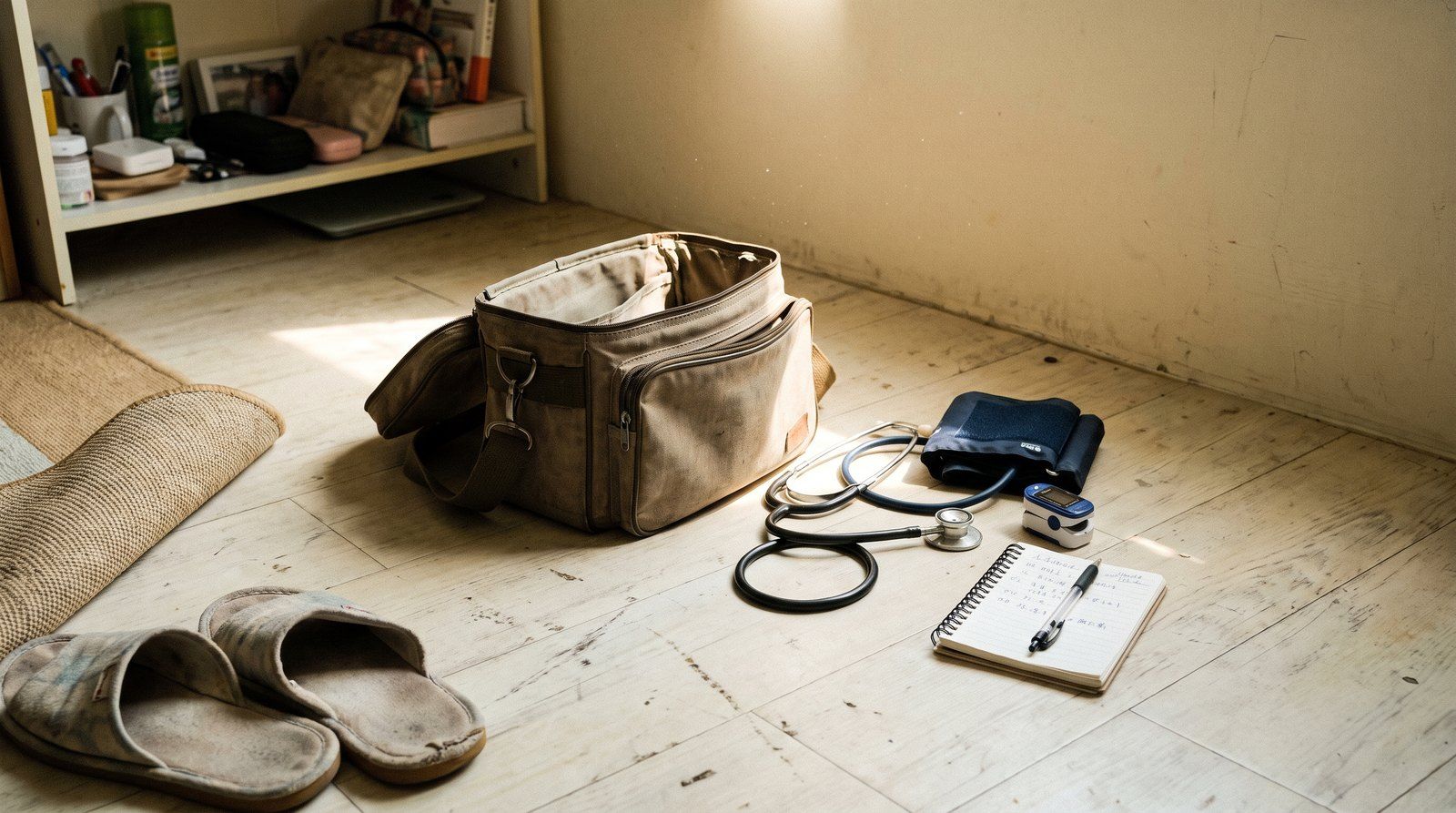
決定請護理師到家裡之後,最後一個讓人猶豫的通常是,那她來了之後要幹嘛。
家裡要不要先整理、要不要準備什麼、我要不要請假在場、一個小時能看出什麼。這篇把第一次到府評估拆開講。
短答案。第一次到府評估大約一個小時,分成四段,看人、看環境、看藥、問家屬。結束的時候你應該拿到三樣東西,最先要處理的兩三件事、一份照顧安排建議、以及什麼狀況要打電話或送醫。
到府護理師第一次來大概要多久
大約一個小時。長輩身上有多條管路、用藥種類多、或者家裡動線比較複雜的時候會久一點。
四個部分的時間大致是,看人十五到二十分鐘,看環境十分鐘,看藥十分鐘,跟家屬談二十分鐘。
第一段,先看人
護理師進門會先看長輩本人。
意識和反應,講話清不清楚、認不認得人、今天跟平常比有沒有差。呼吸,會不會喘、有沒有痰音。皮膚,尤其薦骨、腳跟、耳朵和肩胛這幾個地方有沒有壓紅,這是褥瘡最先出現的位置。身上的管路,鼻胃管、導尿管、造口、引流管各自的固定和刻度。手腳能動到什麼程度,能不能自己翻身、能不能坐起來、能不能站。
量血壓、脈搏、體溫和血氧,這是第一天的基準線。後面每天的數字都跟這一組比。
第二段,看居家環境
這一段家屬常常覺得意外,因為護理師會在家裡走一圈。
她在找會讓人跌倒的東西。床邊擋路的雜物、從床到廁所那條路上的門檻和電線、滑的浴室地板和沒有扶手、半夜起來那段路燈不夠亮、輪椅推不進去的門、高度不對的床。
長輩跌倒大部分發生在自己家裡,而且多半在半夜去廁所那一段。看完環境,護理師會直接跟你說哪一兩個地方先改,通常是很便宜的東西,一盞小夜燈或者把地毯收起來。
第三段,看用藥
把所有在吃的藥拿出來,連藥袋一起。
護理師會看目前吃什麼、幾點吃、有沒有兩種藥含同一個成分、有沒有該停卻還在吃的、有沒有該吃卻漏掉的。家裡有好幾個醫師開的藥的時候,重複和衝突很常見。
發現問題不會自己改。會整理好讓你在下次回診問醫師,或者建議先打電話問藥師。
第四段,問家屬
這一段決定照顧計畫做不做得出來。
她會問晚上是誰起來、誰請假請得最多、誰的工作最難調、家裡有沒有人已經快撐不住。照顧安排要照家裡真正排得出來的人力去排,不然寫得再漂亮都執行不了。
也會問長輩平常的習慣。幾點睡、愛吃什麼、不愛被誰碰、怎麼安撫最快。這些東西比病歷有用。
評估結束前你應該拿到什麼
三件事。
一,接下來最先要處理的兩三件事,照順序排好。
二,一份照顧安排的建議,寫清楚需要哪個時段、幾天、什麼等級的照顧。白班、夜班或二十四小時各自適合什麼狀況。
三,什麼狀況要馬上打電話、什麼狀況要直接送醫。這一條最重要。
拿不到這三樣的話,在護理師離開之前再問一次。
家裡要先準備什麼
- 所有在吃的藥,連藥袋
- 最近的出院病歷摘要或檢查報告
- 健保卡和重大傷病卡
- 一張紙,寫下你最擔心的三件事
- 如果有外籍看護或其他家人一起顧,讓那個人也在場
那張紙很有用。評估的時候容易被流程帶著走,寫下來才不會漏掉你原本最想問的。
什麼時候該安排第一次到府評估
出院前就可以先問。出院當天的銜接常常是最亂的一段,提早幾天安排會輕鬆很多。
長輩狀況在家裡慢慢變化的時候也適合。開始需要人扶、開始忘記吃藥、晚上開始起來走動、或者體重掉得比平常快。變化剛開始的時候處理,比出事之後再處理容易。
常見問題 FAQ
到府護理師第一次評估要收費嗎
告訴我們長輩的狀況,我們會先在線上跟你說可以怎麼安排。需不需要到府評估、怎麼收費,會在安排之前講清楚,不會事後才冒出來。
居家護理評估要多久
大約一個小時。長輩身上有多條管路或者家裡狀況比較複雜的時候會久一點。
家屬一定要在場嗎
最好在場。環境和用藥的部分長輩自己說不清楚,家屬在場一次就問完了。到不了的話,我們可以用視訊帶你走一遍。
到府護理師可以做哪些事
有國家證照的護理師可以執行抽痰、鼻胃管灌食、傷口換藥、給藥、導尿照護和病況判斷。這些屬於護理行為,照服員不能做。詳細範圍寫在什麼是特別護士。
評估完一定要請人嗎
不一定。評估的結果是給你做決定用的。有些家庭聽完之後發現現階段調整環境和用藥就夠了,那也是好結果。
評估之前家裡需要先打掃嗎
不用。護理師要看的是平常的樣子,收得太乾淨反而看不出動線上真正的問題。
我人在國外,可以安排嗎
可以。我們有不少家庭是海外子女安排、長輩在台灣接受照顧。評估紀錄可以用中文或英文給你,需要的話可以在評估過程中打電話給你。
長輩不肯讓陌生人進來怎麼辦
很常見。第一次可以只安排短時間,由家屬陪著介紹,先不做身體檢查。多數長輩在護理師第二次來的時候就放鬆了。
已經有外籍看護了,還需要評估嗎
可以評估。外籍看護不能執行護理行為,管路、傷口和用藥判斷仍然需要護理師。外籍看護空窗期和分工怎麼安排我們另外寫了一篇。
不確定現在的狀況需不需要請人?把長輩的情況告訴我們,我們會誠實跟你說。加 LINE @205tyguj,海外家庭可以用 WhatsApp,或寫信到 hello@caredbyalma.com。
Once a family has decided to bring a nurse into the house, the last hesitation is usually about the visit itself. What will she do for an hour?
Should the house be tidied first. Does anything need preparing. Does someone need to take the day off to be there. This guide takes the first assessment apart.
The short answer. A first home nursing assessment runs about an hour and covers four things, the person, the home, the medication, and the family. By the end you should have three things, the two or three problems to deal with first, a suggested care arrangement, and the symptoms that mean phoning us or going straight to hospital.
How long does a first home nursing visit take
About an hour. Longer when there are several tubes in place, a long medication list, or a complicated layout at home.
That hour is about fifteen to twenty minutes on your parent, ten on the home, ten on the medication, and twenty talking to the family.
Part one, the person
The nurse starts with your parent.
Consciousness and responsiveness, whether speech is clear, whether they recognise people, whether today differs from an ordinary day. Breathing, any shortness of breath, any sound of secretions. Skin, particularly the sacrum, heels, ears and shoulder blades, where pressure injuries show first. Any tubes, how each one is secured and where it is marked. Movement, whether they can turn in bed, sit up, or stand.
She records blood pressure, pulse, temperature and oxygen saturation as a baseline, and compares every later reading with that first set.
Part two, the home
This part surprises families, because the nurse walks through the house.
She is looking for the things that cause falls. Clutter beside the bed. Thresholds and cables on the route to the bathroom. A slippery bathroom floor with no grab rail. Poor light on the path someone walks at three in the morning. Doorways too narrow for a wheelchair. A bed set at the wrong height to transfer from.
Most falls happen at home, and most of those happen on the night time trip to the bathroom. Afterwards she will tell you the one or two things to change first. They are usually cheap, a night light or rolling up a rug.
Part three, the medication
Bring out everything currently taken, in the original packaging.
The nurse checks what is taken and when, whether two drugs share an active ingredient, whether something should have stopped weeks ago, whether a dose is being missed. When prescriptions come from several different doctors, duplication and interaction are common.
She does not change anything herself. She writes it up so you can raise it at the next appointment, or suggests you call the pharmacist first.
Part four, the family
This part decides whether the care plan will work.
She asks who gets up at night, whose leave is running out, whose job flexes least, and whether anyone in the house is already close to breaking. A plan has to match the people your household can provide, or it stays on paper.
The nurse also asks about ordinary habits. When your parent sleeps, what they like to eat, who they do not want handling them, what settles them fastest. That is more useful than anything in the medical file.
What you should be holding at the end
Three things.
One, the two or three items to deal with first, in order.
Two, a suggested arrangement, saying which hours, how many days, and what level of care. Which situations call for day care, night care, or twenty four hour cover.
Three, which symptoms mean phoning immediately and which mean going straight to hospital. That one matters most.
If you do not have all three, ask again before she leaves.
What to have ready
- Every medication currently taken, in its packaging
- The most recent discharge summary or test report
- Health insurance card and catastrophic illness card
- One sheet of paper listing the three things worrying you most
- If a foreign caregiver or another relative shares the care, have them there too
Write them down. An assessment moves quickly, and it is easy to forget what you meant to ask.
When to book the first assessment
Ask before discharge. The handover on discharge day is usually the messiest part, and arranging it a few days ahead makes it much easier.
It also works for slower changes at home. Your parent starts needing a hand to stand, forgets medication, wanders at night, or loses weight faster than usual. Dealing with a small change is easier than dealing with a fall.
FAQ
Is there a charge for the first home nursing assessment
Tell us how your parent is doing and we will talk through the options with you first. We agree whether a home assessment is needed, and what it costs, before anything is arranged.
How long does a home care assessment take
About an hour. Longer when there are several tubes or the household situation is complicated.
Does a family member need to be there
Ideally yes. Your parent cannot cover the home and medication parts alone, and having you there gets it done in one pass. If you cannot make it, we can walk you through by video call.
What can a home visit nurse do
A nationally licensed nurse can suction an airway, run tube feeds, dress wounds, give medication, manage catheter care, and judge a change in condition. A care attendant is not allowed to do any of that. What is a special nurse explains the full scope.
Do I have to book care after the assessment
No. The assessment exists so you can decide. Some families find that adjusting the home and sorting out the medication is enough for now, and that counts as a good outcome.
Should I clean the house before the visit
No. The nurse needs to see how the home works on an ordinary day. Tidying it up hides the obstacles that cause falls.
I live overseas, can I still arrange this
Yes. Many of the families we work with are adult children abroad arranging care for a parent in Taiwan. We send the assessment notes in Chinese or English, and we can phone you during the visit.
What if my parent refuses to let a stranger in
This happens often. We keep the first visit short, let a family member introduce her, and skip the physical examination. Most people relax by the second visit.
We already have a foreign caregiver, is an assessment still useful
Yes. A foreign caregiver is not allowed to perform nursing procedures, so tubes, wounds and medication still need a nurse. Covering a foreign caregiver's leave explains how the two roles fit together.
Not sure whether the situation calls for help yet? Tell us what is going on and we will give you an honest answer. Add us on LINE @205tyguj. Families overseas can talk with us on WhatsApp, or write to hello@caredbyalma.com.