
24 小時看護的真相,誰在凌晨三點幫爸爸翻身? The Truth About 24-Hour Care, Who Turns Dad at 3 A.M.?
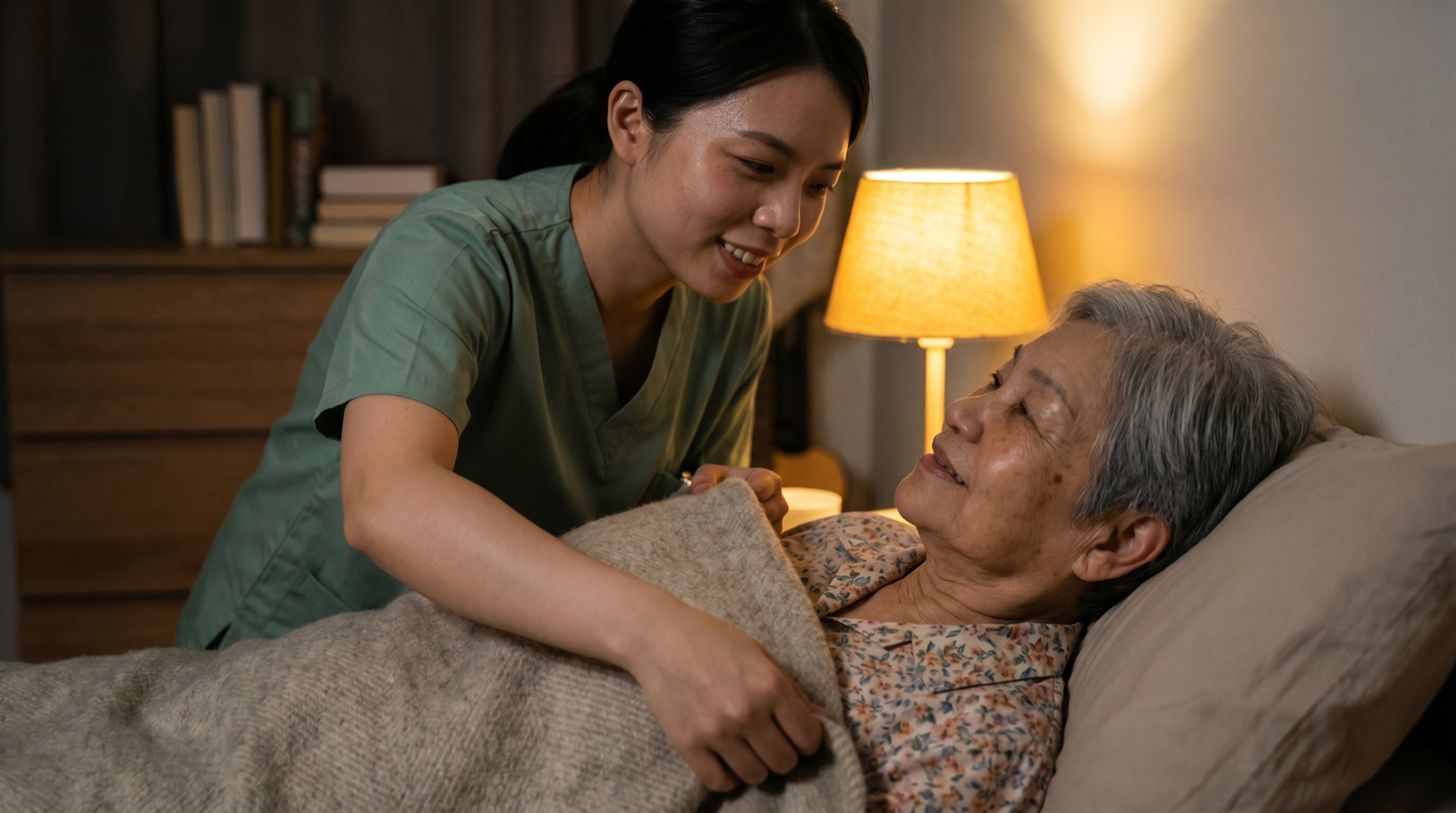
凌晨三點,病房或臥室裡一片安靜。問題是,這份安靜,是因為爸爸睡得安穩,還是因為唯一的照顧者也睡著了?我當護理師這些年,看過太多家屬以為自己買到了「24 小時看護」,實際上買到的是一個必須睡覺的人。這篇文章想把夜裡真正發生的事攤開來講。
「24 小時看護」有三種,差別在半夜
第一種是家屬自己輪。白天上班、晚上守床,PTT 上滿是這樣的描述,在陪病椅上半睡半醒、頭痛、失眠,撐不到一週就垮。第二種是請一位住家看護「包 24 小時」。聽起來全天有人,但任何人都需要睡眠,半夜每兩小時的翻身、該做的拍背抽痰,往往就是在這段時間消失的。第三種才是字面上的 24 小時,兩位照顧者正式輪班,夜班的人是醒著上班的,不是「有事再叫我」。三種模式的價格差距很大,但被省掉的,正是凌晨那幾個小時。
為什麼凌晨的翻身省不得
長期臥床的人若整夜維持同一個姿勢,骨突處的皮膚組織會持續受壓缺血。褥瘡(壓傷)可能在幾小時內開始形成,一旦破皮深及組織,傷口照護常常要拖好幾個月,疼痛、感染風險、回診換藥的負擔全部加在病人和家屬身上。這就是為什麼臨床上要求每兩小時翻身一次,整夜不間斷。一個白天已經工作十幾個小時的看護,半夜是做不到的,這不是責備,是生理事實。
夜裡的風險很多,褥瘡只是其中一項。鼻胃管灌食若姿勢不對、速度太快,或灌完立刻平躺,胃內容物逆流嗆入呼吸道,就是吸入性肺炎。失智長輩的黃昏症候群常延伸到深夜,起身找廁所、想「回家」,夜間跌倒往往就發生在沒人醒著的那一段路上。
真正的夜班紀錄長什麼樣
在 Alma 的 24 小時方案裡,夜班護理師 晚上 8 點 接班、早上 8 點 交班,中間每一件事都有紀錄,晚上 10 點 翻身並檢查皮膚、半夜 12 點 鼻胃管灌藥後維持半坐臥 30 分鐘、凌晨 2 點 翻身、凌晨 3 點半 抽痰一次並記錄痰液性狀、凌晨 4 點 量測生命徵象、清晨 5 點 40 分 協助如廁。早上交班時,日班護理師拿到的是一整夜的臨床數據,每一個變化都清楚記錄。凌晨三點幫爸爸翻身的,是一位醒著值班、領夜班薪水的護理師。
價格怎麼算才誠實,每「安全小時」的成本
Alma 的 24 小時照護是每日 NT$12,600,由兩位國家認證護理師正式輪班,日班 早上 8 點到晚上 8 點(單訂 NT$6,000)、夜班 晚上 8 點到隔天早上 8 點(單訂 NT$6,600),班與班之間有完整臨床交接,沒有最低天數限制。比起「一人包全天」的報價當然更高,但換算下來,您買到的是 24 個每一小時都有人醒著的小時。許多平台標示的「24 小時價格」是一個人。比較價格之前,先問一句,晚上十一點到早上六點,誰是醒著的?
也要說句公道話,不是每個家庭都需要雙護理師輪班。病況穩定、夜間很少醒來的長輩,由住家看護加上家屬支援,是合理的安排。長期照顧我們反而常建議混搭,例如白天由護理師上班、夜間由家屬或住家看護銜接把專業火力放在風險最高的時段。誠實的照顧規劃,比最貴的方案更重要。
五個訊號,您的家人需要專業夜間照護
- 完全臥床、無法自行翻身,尾椎或腳跟已出現壓紅不退的皮膚。
- 有鼻胃管、氣切或需要夜間抽痰,這些屬於護理技術,不是「叫得醒就好」。
- 失智合併夜間遊走或日夜顛倒,曾經半夜起身跌倒。
- 生命徵象不穩定(術後初期、心肺疾病急性期),夜間需要定時監測。
- 主要照顧者已經連續多天睡不滿四小時,照顧者倒下,是整個照顧系統最常見的崩潰點。
符合兩項以上,建議至少讓夜間時段交給專業。想了解雙護理師輪班怎麼運作,可以看Alma 的 24 小時照護服務或加 LINE @205tyguj 跟我們聊聊您家的狀況,就算最後您不需要我們,至少把問題問對。
常見問題 FAQ
24 小時看護的價格大概是多少?
看您買到的是什麼。單一住家看護「包 24 小時」的報價較低,但實際是一個人含睡眠時間。Alma 的 24 小時方案為每日 NT$12,600,由兩位護理師正式輪班(日班 NT$6,000、夜班 NT$6,600 亦可單訂),整夜有人醒著執行翻身、灌食與監測,沒有最低天數限制。
長期臥床一定要每兩小時翻身嗎?
無法自行變換姿勢的臥床者,臨床建議每兩小時翻身並檢查受壓部位,且夜間不能中斷。褥瘡可能在數小時內開始形成,惡化後傷口常需數月才能癒合,預防的成本遠低於治療。氣墊床有幫助,但不能取代翻身。
只訂夜間看護、白天家人自己顧,可以嗎?
可以,而且很常見。Alma 的夜班(晚上 8 點到隔天早上 8 點,NT$6,600)可以單獨預訂,適合白天有家人或外籍看護、但夜間有翻身、抽痰或跌倒風險的家庭。這通常是兼顧安全與預算最務實的組合。
Alma 的看護和一般看護有什麼不同?
Alma 的每一位照顧者都是國家認證的護理師(特別護士),可執行鼻胃管灌食給藥、抽痰、生命徵象監測等護理技術,所有照護皆留下紀錄並完整交班。服務範圍涵蓋台北、新北、台中、高雄,可透過 LINE @205tyguj 或 hello@caredbyalma.com 諮詢。
晚上沒人照顧爸爸,我該怎麼辦?
如果夜間是最讓你擔心的時段,可以單獨請夜班護理師守在身邊,不必硬撐到請 24 小時。Alma 的夜班(晚上 8 點到隔天早上 8 點)為 NT$6,600,由執照護理師值守,能協助起夜、翻身、用藥與病況觀察,讓你晚上能安心睡。想安排可加 LINE @205tyguj。
請24小時看護的費用是多少?
Alma 的 24 小時居家護理為 NT$12,600,全程由領照護理師照護,沒有仲介費。這個價格涵蓋全天的醫療照護,例如定時抽痰、鼻胃管灌食、翻身拍背與生命徵象監測,適合病況較不穩或需要全天看顧的長輩。
媽媽晚上一直起床走動很危險,怎麼辦?
夜間反覆起床、走動是長輩跌倒與骨折的高風險來源,尤其失智或服用助眠藥物的長輩更需要有人即時陪伴。安排一位夜班護理師守在身邊,可以協助安全如廁、防跌與安撫情緒。Alma 的夜班護理師(NT$6,600)即可單獨預約,不必先簽長約。
夜間看護要去哪裡找?
你可以直接找有提供夜班服務的居家護理單位,重點是確認對方是領照護理師而非一般看護,才能處理夜間的醫療狀況。Alma 在台北、新北、台中、高雄都有夜班護理師(NT$6,600),加 LINE @205tyguj 或寄信到 hello@caredbyalma.com,通常一小時內回覆。
晚上誰來照顧我住院的家人?
夜間可以安排一位特別護理師專責看顧你的家人,無論在醫院或家中都能值夜。Alma 的夜班護理師(晚上 8 點到隔天早上 8 點,NT$6,600)會協助翻身、抽痰、用藥與觀察病況,並能用中英文回報情況,特別適合人在國外、無法親自陪夜的家屬。
夜間照護真的有人會整晚守著嗎?
是的,夜班護理師的工作就是整夜在旁看顧,而非只是睡在一旁。Alma 的夜班護理師會定時翻身、觀察呼吸與生命徵象、協助如廁與用藥,並在發生異常時即時處理或通知家屬,讓家人在睡夢中也有人把關。
It is 3 a.m. in your father's room in Taipei, and everything is quiet. The question that should keep you up at night, especially if you live in California or Singapore and manage his care over LINE, is whether that silence means he is sleeping safely, or that the only person responsible for him is asleep too.
Three things people mean by "24-hour care"
In Taiwan, "24-hour care" describes three very different arrangements. The first is family rotation, siblings and spouses taking turns on a cot beside the bed. Local forums are full of the same story, insomnia, headaches, someone dozing off in a hospital chair by day four. The second is a single live-in caregiver hired "around the clock." This is the most common arrangement and the most commonly misunderstood, one human being cannot stay awake for 24 hours, day after day. They sleep at night, because they must. The third arrangement is the only one that matches the words, two trained people working actual shifts, where the night person is awake and on duty, not on call from a mattress in the corner.
Many platforms advertise a "24-hour" price that is really the second model. Before comparing quotes, ask one question, between 11 p.m. and 6 a.m., who is awake?
Why the night hours carry the most clinical risk
A bedbound person who cannot shift their own weight needs to be repositioned roughly every two hours, through the night, every night. Pressure injuries (bedsores) can begin forming within hours of sustained pressure on the tailbone, hips, or heels, and once the skin breaks down, healing can take months of painful wound care. An air mattress helps; it does not replace turning. Night feeding through a nasogastric tube carries its own danger, feed someone too fast or lay them flat too soon, and stomach contents can be aspirated into the lungs. And for elders with dementia, sundowning often stretches deep into the night, the 2 a.m. walk to a toilet, or toward a "home" that exists only in memory, is where many falls happen. Every one of these risks peaks precisely in the hours when a solo caregiver is, understandably, asleep.
What a real night shift looks like
At Alma, every caregiver is a nationally licensed registered nurse, and our 24-hour service is built as two genuine shifts, a day nurse from 8am to 8pm and a night nurse from 8pm to 8am, with a full clinical handover between them. A typical night log reads like this, 10pm repositioned, skin checked; midnight medication via NG tube, kept semi-upright for 30 minutes; 2am repositioned; 3.30am suctioned, secretions documented; 4am vital signs recorded; 5.40am assisted to the toilet. When the day nurse arrives, she receives data, not a shrug. For overseas family, that log is also your answer to "how was Dad last night?", in writing, every morning.
The honest math, and when cheaper is fine
Alma's two-nurse arrangement isNT$12,600 per day(roughly US$400), with no minimum number of days, the day shift alone is NT$6,000 and the night shift alone is NT$6,600. That is more than a single live-in caregiver, and it should be, you are paying two professionals so that all 24 hours are covered by someone awake. But we will also tell you when you do not need it. If your parent is medically stable and rarely wakes at night, a live-in caregiver plus family support is a reasonable model. For long-term cases we often recommend a mix, for examplenurse day shiftscombined with a family or live-in caregiver, or professional cover for nights only, concentrating the clinical skill where the risk lives.
Five signs your family member needs professional night cover
- Fully bedbound and unable to turn alone, especially with any redness over the tailbone or heels that does not fade.
- An NG tube, tracheostomy, or any need for overnight suctioning, these are nursing procedures, not tasks for someone half-asleep.
- Dementia with night wandering or day-night reversal, particularly after any nighttime fall.
- Unstable vital signs, early post-surgery, or an acute phase of heart or lung disease, requiring scheduled overnight monitoring.
- A primary caregiver who has not slept four straight hours in days. Caregiver collapse is the most common failure point of the whole system.
If two or more apply, hand the night to a professional. You can read how our two-nurse model works on the24-hour care service pageor write to us at hello@caredbyalma.com or LINE @205tyguj. We serve Taipei, New Taipei, Taichung, and Kaohsiung, and we answer overseas families in English.
FAQ
How much does genuine 24-hour care cost in Taiwan?
Alma's two-nurse arrangement is NT$12,600 per day, covering a day shift (8am to 8pm) and a night shift (8pm to 8am) with a clinical handover between them. Either shift can also be booked on its own, and there is no minimum number of days. Cheaper "24-hour" quotes from platforms are usually a single live-in caregiver who sleeps at night.
Can I book only the night shift?
Yes. The night shift (8pm to 8am) is NT$6,600 on its own. It is a popular choice for families who have daytime help but face overnight risks, repositioning, suctioning, tube feeding, or fall-prone wandering.
Are Alma's caregivers really nurses?
Yes, every Alma caregiver is a nationally licensed registered nurse. That means tube feeding, medication administration, suctioning, and vital-sign monitoring are performed by someone trained and legally qualified to do them, and every action is logged and handed over.
How do I stay informed from overseas?
Every shift produces a written care log, repositioning times, feeds, medications, vitals, and anything unusual, so you can see exactly what happened overnight rather than relying on a vague "all fine." Reach us anytime at hello@caredbyalma.com or LINE @205tyguj.
There's no one to look after my dad at night, what should I do?
If nights are what worry you most, you can book a night nurse on their own rather than stretching to full 24-hour care. Alma's night shift (8pm to 8am) is NT$6,600 with a licensed RN at the bedside to help with getting up, repositioning, medication and monitoring, so you can finally sleep. Message LINE @205tyguj to arrange it.
How much does 24-hour care at home cost?
Alma's 24-hour home nursing is NT$12,600, delivered entirely by licensed RNs with no agency fees. That covers a full day of medical care such as scheduled suctioning, NG tube feeding, repositioning and vital-sign monitoring, which suits a parent who is unstable or needs watching around the clock.
My mum keeps getting up at night and it's dangerous, what can I do?
Getting up and wandering at night is a leading cause of falls and fractures in older adults, especially with dementia or sleeping medication, so having someone right there matters. A night nurse can help with safe toileting, fall prevention and calming agitation. Alma's night nurse (NT$6,600) can be booked on its own, with no long contract required.
Where can I find a night nurse for an elderly parent at home?
Look for a home nursing provider that offers a dedicated night shift, and make sure they send a licensed RN rather than a general caregiver so medical situations are covered overnight. Alma has night nurses (NT$6,600) in Taipei, New Taipei, Taichung and Kaohsiung. Reach us at LINE @205tyguj or hello@caredbyalma.com and we usually reply within an hour.
Who takes care of my parent at night?
A special nurse can be assigned to watch over your parent overnight, whether in hospital or at home. Alma's night nurse (8pm to 8am, NT$6,600) helps with repositioning, suctioning, medication and monitoring, and can report back in Chinese or English, which is ideal for family overseas who can't be there at night.
Does the night nurse stay awake the whole shift?
Yes, a night nurse's job is to stay attentive through the night, not simply sleep beside the patient. Alma's night nurses reposition on schedule, watch breathing and vital signs, help with toileting and medication, and act or alert the family at once if something changes, so someone is keeping watch while your loved one sleeps.